
Find Out What You Can Build
Zoning, Parcel Lines, Accessory Structures
Before You Start Any Work
Do I need a Permit, Pre-Planning, Pools, Driveways
Apply for a Building, Demolition or Sign Permit
Application Requirements, Forms, Fees, Timelines
Building Bulletins & Resources
Building Code, Development Standards, Infill Housing

Building Department Statistics
Building and Development Activity

Contact the Building Department
Get in Touch

Find Out What You Can Build
This section provides information on allowed uses for your property, addresses accessory structures, fences and retaining walls as well as provides guidance on how to obtain your parcel lines.
The Town's Zoning Bylaw provides guidance on what type of buildings and uses of a property are allowed in each designated zone. Uses and types of buildings are categorized as either Principal or Accessory Uses in the Zoning Bylaw.
To determine the zoning for your property, follow these two steps:
Step 1: Determine the zoning of your property. Zoning can be accessed through the RDOS Public Parcel Viewer at Public Parcel Viewer. Find your address and click on your parcel. The parcel report will have a section with Zoning Information.
Step 2: With the obtained Zoning Information, reference the Town of Oliver Zoning Bylaw 1423 at Bylaws to determine the Principal Uses, Accessory Uses, Setbacks, etc.
If there are any questions about a stated property use, consult the definition section of the Zoning Bylaw on pages 10 - 26.
Your property has likely been surveyed in the past. You can obtain a survey plan for your parcel through the Land Title Office for reference. Depending on when the survey was conducted, survey markers on your property might no longer be present or in the same location due to factors such as building activity or earthworks.
To accurately determine your property lines, hiring a registered professional surveyor is the best course of action.
Additionally, the Town Office can provide you with a satellite overlay of your estimated parcel lines and parcel dimensions.
Image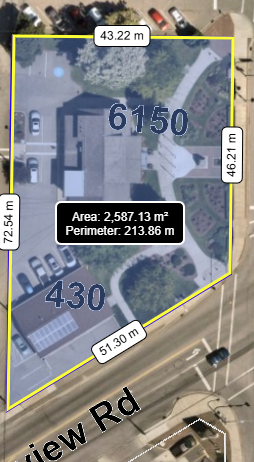
To determine where on your property you are allowed to add/modify a structure, it is helpful to understand setbacks and parcel line relations.
Page 23 of Zoning Bylaw 1423 (Link: Bylaws) provides an illustration on various parcel shapes and setback/parcel line designations.
Image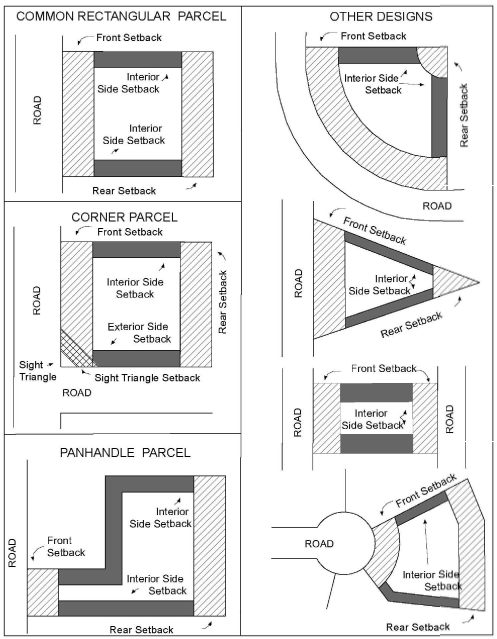
Fences can be erected anywhere on the property with the following conditions:
In the front yard setback, fences can be up to 1.2 metres tall. In side and back yards, fences can be up to 1.8 metres tall. Barbed wire and electric fencing are only allowed in the A, AGX, M1, and AP zones, and razor wire is not allowed anywhere.
Some zones have different limits: properties in AG and AGX zones may have fences up to 1.8 metres, and deer fencing in these zones has no height limit as long as it’s made from material you can see through, such as wire mesh. In CS2 and M1 zones, fences may be up to 2.4 metres tall.
Retaining walls also have specific limits. If a retaining wall is within a required setback, it can be no more than 1.2 metres tall. Outside of required setbacks, retaining walls can be up to 3.0 metres tall. When multiple retaining walls are used, they must be placed at least 1.2 metres apart. If a fence is built on top of a retaining wall, the fence height and wall height are measured separately and must each meet their own rules.
Image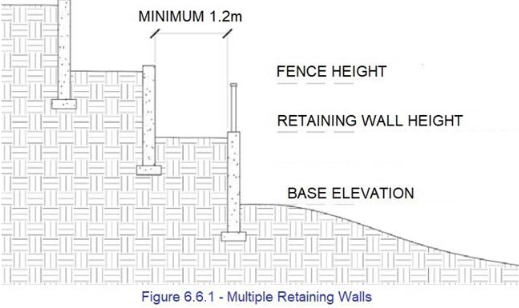
For properties located on a corner near a street intersection, visibility rules apply for safety. Within 4.5 metres of the corner, no fence, hedge, tree, sign, or similar structure may be taller than 1.0 metre.
Image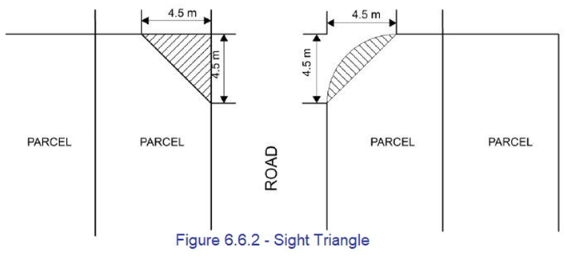
In residential zones, all accessory buildings and structures combined may not cover more than 90 square metres of the property. Some features are allowed anywhere on a lot, including trellises, pergolas, children’s play structures, and fences or retaining walls (as long as fence and wall rules are followed).
In RS1 and RSM zones, fabric‑covered structures are treated the same as accessory buildings, and only one is permitted on a property.
Small accessory buildings or structures up to 10 square metres may be placed anywhere on a lot—even inside the side or rear setbacks—as long as they are not located within the front setback.
Please refer to Section 4 - Building Code Bulletins for guidance on pathways for conversions of basements and Infill Housing.
Before You Start Any Work

This section provides information on the Building Regulations in the Town of Oliver.
Building permits are required for most types of construction. The list below provides some examples but please do not hesitate to contact the Town of Oliver for questions about your specific project.
Alterations to an existing building or structure that include adding, removing of walls (non-loadbearing and loadbearing); adding windows/doors to an existing wall; enlarging existing window/door openings; repairing structural elements due to failure (posts, beams, trusses, foundation walls, etc.); substantially removing sheathing/drywall in anticipation of a major interior renovation or rehabilitation of a building
Repairs on an existing building or structure due to damage caused by fire, flood, wind, water, mold, etc. Maintenance repairs, such as replacing roofing or replacing windows like-for-like do not require permits
Substantial repairs to water and sewer systems such as replacement of water/sewer lines from the public system to the building; substantial replacement of water/sewer lines within a building (e.g. Poly-B replacement)
Installation of additional plumbing fixtures such as bathroom fixtures, sinks, hose bibs, etc.
New construction of a building or structure exceeding 10 square metres in gross floor area or one storey in height
Completing an unfinished area in an existing building such as a basement
Constructing any structure that supports a roof such as a gazebo, shade structure, garage, covered deck or patio, etc.
Demolishing or relocating a building
Moving or placing a mobile home or temporary structure
Building or installing a wood-burning appliance or chimney
Constructing or altering an in-ground swimming pool
The Town of Oliver encourages you to connect with us early in the planning stages of your project. We’re here to help guide you through zoning rules, building code requirements, and other regulations so you can avoid unexpected delays.
Questions about setbacks, permitted uses, water and sewer servicing needs, sensitive habitat considerations, development permits, and similar requirements can lead to significant challenges if they aren’t addressed up front. Reaching out early ensures your project starts on the right track.
If you have questions or need guidance, please contact us at planning@oliver.ca or call 250‑485‑6250—we’re happy to help.
The Environmentally Sensitive Development Permit Area (ESDPA) is designated to protect Oliver’s natural environment, ecosystems, and biodiversity. These areas are shown on the map below.
A Development Permit is required for subdivision, constructing or altering buildings, or any land‑altering activities within the ESDPA, unless exempt. Exemptions include work on public facilities or utilities, repairs to existing buildings that do not increase the footprint, agricultural activities in the ALR, fence repairs, and subdivisions that only consolidate or adjust property lines without creating new lots.
Where a permit is required, an Environmental Assessment must be completed by a Qualified Environmental Professional familiar with South Okanagan ecosystems. The assessment typically includes identifying ecological conditions, determining an appropriate development footprint, and evaluating potential impacts and mitigation measures. Sensitive portions of the site may be designated as non‑disturbance areas, which must be protected during construction.
Image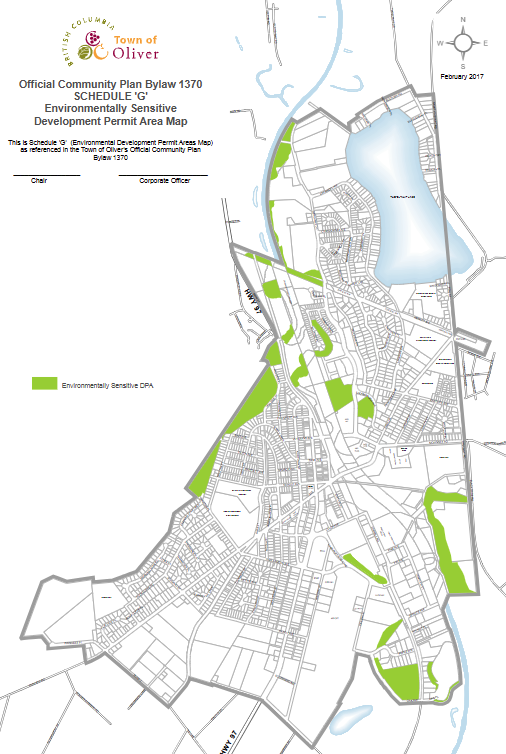
The Watercourse Development Permit Area is designated under Section 488(1)(a) of the Local Government Act to protect watercourses, riparian areas, and aquatic ecosystems. These areas are shown on the map below and definitions in the Act and the Provincial Riparian Areas Regulation (RAR) apply.A Development Permit is required for most activities in the WDP Area, including vegetation removal, soil disturbance, construction, adding impervious surfaces, flood protection works, roads and bridges, drainage systems, utility corridors, and subdivision. Exemptions apply to work on public facilities or utilities; repairs to existing buildings that do not expand the foundation; agricultural uses in the ALR; previously permitted areas where conditions have been met; and normal gardening or yard maintenance within already landscaped areas.
If a Development Permit is required, an Environmental Assessment must be completed by a Qualified Environmental Professional familiar with South Okanagan ecosystems. In cases where development may be near the boundary of a Watercourse DPA, a survey supervised by a QEP may be required. If the QEP confirms the project is outside or will not impact the DPA, no permit is required.
Image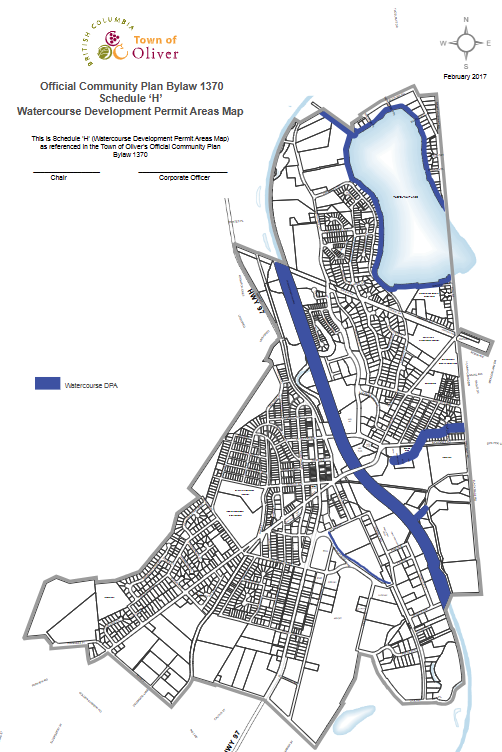
The Town of Oliver is located in one of B.C.’s highest wildfire‑risk regions, where hot summers, fast‑moving grass and shrub fires, and growing interface development make wildfire‑resilient building essential. As part of our Community Wildfire Resiliency Plan, the Town encourages all applicants to plan ahead with wildfire in mind when designing, renovating, or landscaping their property.
Building in the Wildland‑Urban Interface means your choices - materials, layout, vegetation, and maintenance - directly influence how well your home or business can withstand ember showers, radiant heat, and fast‑moving fires. The most effective way to reduce structure loss is to reduce ignitability, starting at the building itself and moving outward through your property.
Visit oliver.ca/firesmart for more information and reference the Oliver Community Wildfire Resiliency Plan.Buildings constructed before 1990 often contain hazardous materials such as asbestos, lead, mercury, and other harmful substances. These materials can pose serious health risks if they are disturbed during renovations, additions, or demolition. To help keep workers, homeowners, and the public safe, WorkSafeBC requires a Hazardous Materials Survey for any pre‑1990 building undergoing this type of work. This applies to both residential and commercial projects. If you are a homeowner planning minor repairs, please contact the Building Department to confirm whether your project requires a survey.
A qualified professional must inspect the building, test any suspect materials, and provide a written report outlining findings and recommended actions. If hazardous materials are identified, WorkSafeBC must be notified, and all hazardous materials must be properly removed and disposed of by trained professionals. Once the work is safely completed, the qualified professional will issue a clearance letter, which must be provided before Town staff can enter the property.
Hazardous materials were commonly used in buildings prior to 1990, and improper handling can result in significant health risks. Understanding the hazards, the required procedures, and the proper safety steps is essential for anyone working with older buildings.
Please reference WorkSafeBC for more information.
Some projects require professional design due to the complexity of the project. Professional design must be provided by a registered professional that is governed under the Professional Governance Act e.g. an Architect, Geotechnical Engineer, Structural Engineer, Civil Engineer, Biologist, etc.
Projects, new construction or alterations, that usually require the engagement of a registered professional may include:
Residential Buildings with more than 4 dwelling units
Buildings over 3 storeys in height
Buildings with a building area over 600 square metres
Commercial buildings with a building area over 470 square metres
Any construction on a sloped site
Construction that features walls taller than 3.0m
For an overview on the requirement for professional design, please reference the AIBC's Reserved Practice Descriptive Material as well as Division C, Subsection 2.2.7. of the current BC Building Code.
Various commercial and industrial activities have potential to cause contamination at a site. Many of these uses are found in Schedule 2 of the Contaminated Sites Regulation. The site identification process ensures these activities are disclosed at certain points of a site’s lifecycle. For example, when decommissioning or redeveloping a site.
If a site is contaminated, it needs to be cleaned up, or remediated, before it can be redeveloped and used for another purpose.
Visit the Provincial Government Website for more information.
A building permit is required for anyone constructing or structurally repairing a swimming pool, spa, or hot tub. Depending on the complexity of the design and soil conditions, professional engineering design and field reviews may also be required. Pool drainage must remain on the same property and should be discharged to the ground wherever possible.
Every pool, spa, or hot tub must be enclosed by a safety fence unless otherwise noted. Fences must be at least 1.2 metres high, with no more than 100 mm between the bottom of the fence and the ground. Fences cannot have footholds or climbing points; if chain‑link is used, the mesh must not exceed 38 mm. Vertical pickets must be spaced no more than 100 mm apart. Above‑ground pools with walls at least 1.22 metres high do not require a separate fence, provided any ladder or stair access is protected by a self‑closing gate.
Any gate providing access to a pool, spa, or hot tub must be self‑closing and self‑latching, with the latch located on the pool side of the gate. As an alternative to fencing, spas or hot tubs may be secured with a locking safety cover.
Minor plumbing repairs and routine maintenance inside a building generally do not require a permit.
However, more significant work, such as replacing water or sewer lines between the public system and a building, upgrading major portions of plumbing inside the building (including Poly‑B replacement), or adding new plumbing fixtures like bathroom fixtures, sinks, or hose bibs, does require a permit.
The Town of Oliver does not currently have a formal driveway permit application process. Any requests for driveway approvals must be directed to the Director of Operations. No alterations to asphalt curbs may be made without approval.
For technical requirements, property owners and developers should refer to the Town of Oliver Subdivision and Development Servicing Standards, which outline current driveway regulations.
Each property is generally allowed one driveway access, unless a demonstrated need exists and the Director approves an additional access.
For larger parking areas, access may need to be provided through curb returns rather than standard letdowns. The Director may also require acceleration or deceleration lanes for driveways connecting to major roads to improve safety and reduce traffic disruption.
Driveways must be placed at least 2 metres away from fire hydrants, utility poles, streetlights, street signs, and boulevard trees.
Residential Driveways (Single‑Family Homes)
Minimum width: 3.0 m
Maximum width: 7.0 m
Minimum surface: compacted all‑weather gravel
Minimum curve radius: 9.0 m (centreline)
All Other Driveways (including panhandle lots)
Minimum width: 6.0 m
Maximum width: 12.0 m
Minimum surface: hot‑mix asphalt concrete
Minimum curve radius: 12.0 m (centreline)
The Town's Building Bylaw requires every permit holder to provide adequate tree protection during construction. While the bylaw does not have specific requirements, the following protection measures should be considered for guidance:
Establish a Protected Zone: Install sturdy fencing (orange construction fence) at the tree's drip line (outer edge of branches) or a minimum of 1 foot radius per 1 inch of trunk diameter.
Prevent Soil Compaction: Do not drive heavy machinery or park vehicles near trees, as this crushes roots and removes soil oxygen.
Protect Trunks: Wrap trunks with 2x4 lumber or thick material to prevent damage from equipment.
Root Protection: If excavation must happen nearby, have an arborist hand-dig or use air-spading to expose roots rather than ripping them with heavy machinery.
Watering and Care: Water trees deeply during dry periods before, during, and after construction to minimize stress.
Mulching: Apply a 6-12 inch layer of wood chips around the tree to reduce soil compaction if equipment must pass near.
Apply for a Building, Demolition or Sign Permit
This section provides detailed guidance on the application process for various types of permits.
The following documentation must be submitted with a Building Permit Application.
BUILDING PERMIT APPLICATION DOCUMENT CHECKLIST
Please note that not all requirements apply to all types of projects. Please connect with the Development Services Department early on to inquire what documentation is required for your specific project.
The following documentation must be submitted with a Demolition Permit Application.
- Application Form
- Application Fee Paid
- Current State of Title
- Letter of Authorization and Owner’s Undertaking
- Acknowledgement of Municipal Property Protection
- Hazardous Waste Assessment Report (if applicable)
- Proof Of Utility Disconnection
- Approved RDOS Waste Disposal Application for Demolition Waste and Renovation Waste
The following documentation must be submitted with a Sign Permit Application.
- Application Form
- Application Fee Paid
- Current State of Title
- Letter of Authorization and Owner’s Undertaking
- Architectural Drawings Showing The Scope Of The Project
The following charges apply to all permit applications:
Building/Demolition Permit Application
Paid at Time of Application Intake$150.00 Land Title Search
Required at Time of Application$15.00 Sign Permit Application
Paid at Time of Application Intake$50.00 Permit Fee - based on Construction Value
Paid at Time of Permit Pick-Up1% of Construction Value Water/Sewer Inspection
If a water or sewer service is altered$150.00 Payments may be made online using a credit card. Please note that a 2.5% service fee applies. The Town will provide you with a 7-digit permit number and detailed instructions to complete the payment process. Alternatively, the Town Hall accepts debit, cash or cheque in person.
Processing time from application intake to issuance of the permit depends on the complexity of the project and requirements for further clarifications and documentation. It is recommended to schedule a pre-application meeting with the Development Services Department to avoid delays at the permitting stage.
The below timelines provide guidance on applications of various types from time of application to issuance of permit, if no further documentation or clarification is required from the applicant.
Sign Permit 1 Week Alteration of Single Family Dwelling 1 Week Conversion of Basement into Secondary Suite 1 Week Change of Tenant in Commercial Space 1 Week Tenant Improvement in Commercial Space 2 Weeks Alteration to complex building 2 Weeks New construction of Single Family Dwelling 2 Weeks Demolition Permit 1 Week
Buidling Officials may conduct periodic site visits to ensure the work generally conforms to required codes and bylaws.
Owners must give the Town at least 24 hours’ notice when requesting inspections, and written acceptance from a building official must be obtained before any work is concealed. Inspections are required for key stages such as excavation, foundations, plumbing rough‑in, framing, insulation, exterior weather barriers, specialty installations, and final health and safety checks prior to occupancy.
Inspection requests must be submitted online or in writing. Work must not be covered until the Town has inspected and approved it.
For complex buildings, additional requirements apply.
Building Permit Application Download (Print)
Download (Fillable)Demolition Permit Application Download Application for Water/Sewer Service Download Sign Permit Application Download
Building Bulletins & Resources

This section provides information for homeowners and builders that are seeking additional resources for building science education, grants and rebates.
- Image
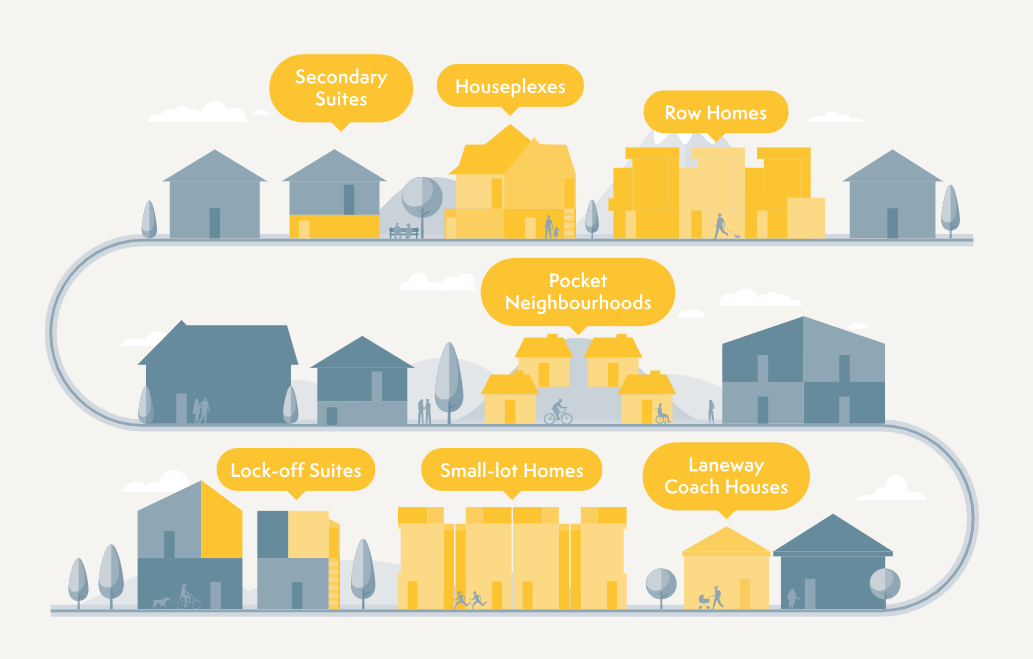
The Town of Oliver has adopted Zoning Bylaw 1423 which reflects the new legislation to deliver more small-scale, multi-unit housing for people, including townhomes, triplexes and laneway homes, and fix outdated zoning rules to help build more homes faster. Refer to Zoning Bylaw 1423 here, most notably the Residential Low Density One (RS1).
ImageFor more ideas and information on Small Scale, Gentle Density, Infill Housing, visit Small Housing BC.As a non-profit organization, they focus on transforming single‑detached neighbourhoods into more affordable, vibrant, and inclusive communities. By collaborating with governments, industry partners, and homeowners, they work to create more spaces for people to call ‘home’.
Building Department Statistics

This section provides statistical data of building and development activity in the Town of Oliver.
Current Building Activity Statistics
2026 - January
2026 - February
2026 - March
2026 - April
2026 - May
2026 - June
2026 - July
2026 - August
2026 - September