





Official Community Plan

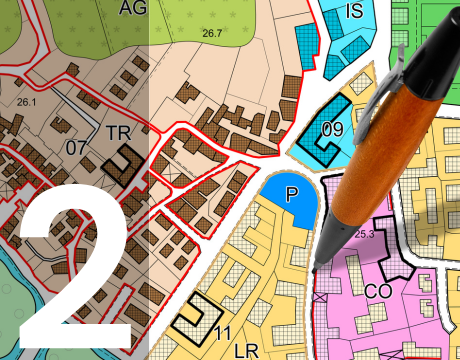
The Official Community Plan (OCP) is a long‑term planning document that helps guide future development and growth in our community.
An Official Community Plan (OCP) provides long‑term guidance and policy direction on a wide range of community matters, including land use, transportation, housing, parks, and infrastructure.
OCPs are developed through extensive public consultation and are intended to reflect the shared values, priorities, and aspirations of residents within the planning area. The Town of Oliver uses its OCP to help guide decision‑making on important topics such as economic development, transportation, recreation, environmental protection, and community services.
The OCP also designates land for specific purposes, including residential, commercial, retail, office, industrial, and park uses. While the OCP does not commit the Town to proceed with any specific project, all future bylaws and Council decisions must be consistent with the policies set out in the plan.
Find a copy of Oliver's Official Community Plan at the link.
An Official Community Plan (OCP) amendment is required when a proposed development or land use does not align with the current OCP land‑use designations or policies.
You may need to apply for an OCP amendment if your proposal would:
Change the land‑use designation (e.g., residential to commercial)
Increase density or building intensity beyond what the OCP allows
Introduce a use not contemplated in the current plan
Significantly alter the scale or character of development
Conflict with existing OCP goals or policy direction
OCP amendments are intended for long‑term, community‑wide planning changes, not minor site adjustments. Applications typically involve technical review and public consultation, and approval is at the discretion of Council.
In some cases, an OCP amendment must be approved before a zoning amendment can be considered, as all zoning must be consistent with the OCP.
Applications to amend the Official Community Plan must be submitted in writing by the property owner or an authorized agent, using the appropriate application form and accompanied by the required fee. If the property is owned by a numbered company, a current corporate search identifying the company directors must be provided, and the application must be signed by a director.
Applicants are required to submit a letter of intent describing the proposed development or land use, including the anticipated community or neighbourhood benefits, potential impacts, and how the proposal supports the objectives of the Official Community Plan. A current State of Title Certificate, issued no more than 30 days prior to application, and copies of all relevant non‑financial charges registered on the property must also be included.
Supporting materials such as a scaled site plan and preliminary development plans are required to illustrate the proposed layout, access, buildings, and other relevant features of the site. Additional information or studies may be requested as part of the review process.
Once submitted, Town staff will review the application for completeness and circulate it to relevant Town departments, agencies, and authorities. The proposal will be evaluated for consistency with municipal bylaws and policies, and a technical report will be prepared for Council’s consideration.
Public notification and consultation may be required in accordance with the Local Government Act, including public notice, written submissions, and a Public Hearing where applicable. Council may approve, refer, table, or deny an application at any stage of the process. Even if all requirements are met, approval is not guaranteed.
Application Submission & Completeness Review (4–6 weeks)
Before submission, applicants typically consult with planning staff, prepare studies and drawings, and assemble the required materials. Once submitted, Town staff review the application to confirm all required information has been provided.Staff Review & Public Notification & Consultation (2–10 weeks)
The application is circulated to relevant Town departments, agencies, and ministries. Staff evaluate the proposal’s consistency with the OCP, zoning, and other applicable policies and prepare a report for Council. If public notice or a Public Hearing is required, notification is provided in accordance with the Local Government Act. This includes advertising, neighbour notification, written submissions, and posting signage on the subject property.Council Readings & Adaption (1–3 Council meetings)
Council considers the application and may approve readings of the amending bylaw, request changes, refer the application, or deny it. Additional time may be required if conditions are imposed or revisions are requested. Once all conditions are satisfactorily addressed and any required approvals are received, Council may adopt the amendment bylaw. The applicant is then notified of the final decision.Estimated Overall Timeline:
Most OCP amendment applications take 3 to 12 months from submission to adoption, though more complex proposals may take longer.To start the application process, connect with us by email at planning@oliver.ca or by phone at 250-485-6250. You may complete the Land Use Application Form, found at the link below.
The application fee is set at $2,000.00 through the Fees and Charges Bylaw.
Zoning Amendments
Zoning sets the ground rules for how land is used and what can be built in different parts of a community.
The Town of Oliver’s Zoning Bylaw divides the municipality into different zones and sets out rules for how land can be used and developed within each zone. Its purpose is to help ensure that development is compatible with surrounding land uses, while supporting the community’s long‑term planning goals.
The Zoning Bylaw regulates, among other things:
How land, buildings, and structures may be used, including permitted and prohibited uses
The density of development, such as how much can be built on a property
The siting, size, and dimensions of buildings and structures, including where they may be located on a lot
Parcel size and subdivision standards, including minimum and maximum lot sizes
Off‑street parking and loading requirements
Landscaping and screening provisions to reduce visual and noise impacts
Floodplain regulations to help protect people and property
Other matters authorized under provincial legislation
By establishing consistent regulations across the community, the Zoning Bylaw helps manage growth, and ensure development aligns with provincial requirements and the Town’s Official Community Plan.
A zoning amendment (also called a rezoning) is required when a proposed use or form of development does not comply with the current zoning of a property.
Someone should apply for a zoning amendment if they are proposing to:
Use a property for a purpose that is not permitted in the existing zone
Increase development density beyond what current zoning allows
Change building regulations, such as height, lot coverage, setbacks, or number of units, where variances cannot address the proposal
Rezone land to better align with the Official Community Plan or surrounding land uses
Support a subdivision or development proposal that requires different zoning permissions
A zoning amendment is typically a longer process than a development permit or variance, as it involves public notification, review by Council, and consideration of community impacts.
Applicants are encouraged to contact Planning staff early to confirm whether a zoning amendment is required and to discuss application requirements before submitting a proposal.
Applications for a zoning amendment must be submitted in writing by the property owner or an authorized agent, using the appropriate application form and accompanied by the required fee. If the property is owned by a numbered company, a current corporate search identifying the company directors must be provided, and the application must be signed by a director.
Applicants are required to submit a letter of intent describing the proposed development or land use. The letter should explain the purpose of the zoning amendment, outline the anticipated community or neighbourhood benefits, identify potential impacts, and describe how the proposal aligns with the Town’s planning policies and objectives.
A current State of Title Certificate, issued no more than 30 days prior to application, must be submitted, along with copies of all relevant non‑financial charges registered on the property.
Supporting materials are required, including a scaled site plan and any preliminary development plans, to illustrate the proposed layout, access, building arrangement, and other relevant features of the site. Additional information or technical studies may be requested as part of the review process.
Once submitted, Town staff will review the application for completeness and circulate it to relevant Town departments, agencies, and authorities. The proposal will be evaluated for consistency with the Zoning Bylaw, the Official Community Plan, and other applicable municipal policies. A technical report will then be prepared for Council’s consideration.
Public notification and consultation may be required in accordance with the Local Government Act, including public notice, opportunities for written submissions, and a Public Hearing where applicable. Council may approve, refer, table, or deny an application at any stage of the process. Meeting all application requirements does not guarantee approval.
To start the application process, connect with us by email at planning@oliver.ca or by phone at 250-485-6250. You may complete the Land Use Application Form, found at the link below.
The application fee is set at $2,000.00 through the Fees and Charges Bylaw.
Development Permits

Development permits review the design, layout, and impact of a project to make sure development is aligned with local policies before construction begins.
Under Section 488 of the Local Government Act, the Official Community Plan (OCP) may designate Development Permit Areas (DPAs) within the Plan Area. Unless otherwise specified, a Development Permit must be approved by Council before any land disturbance, development, or subdivision occurs within a designated Development Permit Area.
For each Development Permit Area, the OCP identifies the special conditions or objectives that justify the designation and sets out guidelines for how those conditions or objectives must be addressed through development.
Designated Development Permit Areas
The following six Development Permit Areas are designated in the Official Community Plan:
Town Centre Development Permit Area, as identified in Schedule “F” – Form and Character Development Permit Areas Map
Multiple Family Development Permit Area, as identified in Schedule “F” – Form and Character Development Permit Areas Map
Commercial Development Permit Area, as identified in Schedule “F” – Form and Character Development Permit Areas Map
Industrial Development Permit Area, as identified in Schedule “F” – Form and Character Development Permit Areas Map
Environmentally Sensitive Development Permit Area, as identified in Schedule “G” – Environmentally Sensitive Development Permit Areas Map
Watercourse Development Permit Area, as identified in Schedule “H” – Watercourse Development Permit Areas Map
Development proposals within these areas must meet the applicable Development Permit guidelines before proceeding.
Find the Schedules and Maps in our Mapping Services Section.
A Form and Character Development Permit helps ensure that new development and exterior building changes are well designed, visually compatible, and sustainable, while fitting appropriately within surrounding neighbourhoods and the broader community.
When reviewing a Form and Character Development Permit, the Town may consider:
Building siting and orientation - How buildings are positioned on the site, their relationship to streets and sidewalks, opportunities for passive solar orientation, and how they respond to views, open spaces, and natural features.
Building massing, design, and appearance - The overall size, scale, rooflines, exterior finishes, architectural variation, and how the building’s design complements surrounding development and reinforces Oliver’s desired community character, including its “Wine Capital” identity.
Pedestrian‑friendly design - Safe and direct pedestrian access from public sidewalks to building entrances, without unnecessary conflicts with vehicle areas.
Parking, access, and circulation - The location and design of parking areas and driveways, including setbacks from streets, pedestrian walkways through parking areas, screening of parking structures, and integration of landscaping to reduce visual impacts.
Bicycle and mobility scooter facilities - Convenient, visible, weather‑protected, and secure parking near main building entrances.
Landscaping and screening - Retention of mature trees where possible, use of landscaped buffers and islands, boulevard tree planting, screening of outdoor storage and mechanical equipment, and high‑quality fencing and screening to minimize impacts on adjacent properties.
Stormwater management - Use of low‑impact, on‑site stormwater approaches such as bioswales, rain gardens, and permeable surfaces to reduce runoff and protect water quality.
Energy efficiency and environmental sustainability - Measures to reduce energy use and greenhouse gas emissions, including encouragement of industry‑recognized building standards, efficient building technologies, and waste reduction through on‑site recycling and organics collection.
Compatibility with surrounding land uses - Ensuring new development enhances its surroundings, minimizes conflicts with neighbouring properties, and contributes positively to the overall image and livability of the community.
Form and Character Development Permits apply to designated Commercial, Industrial, Town Centre, and Multiple Family Development Permit Areas, as identified in the Official Community Plan. Routine maintenance and minor upgrades may be exempt, but most new construction, additions, and exterior alterations require a permit.
Environmentally Sensitive and Watercourse Development Permits are intended to protect important natural areas, ecosystems, and water features while allowing development to proceed in a responsible and informed manner.
Environmentally Sensitive Development Permit Area
The Environmentally Sensitive Development Permit Area protects sensitive ecosystems and wildlife habitat, including grasslands, wetlands, riparian areas, forests, steep slopes, and habitats for species at risk.
A permit may be required for subdivision, construction, or land alteration within these areas. Development proposals are reviewed to ensure:
Sensitive ecosystems and wildlife habitats are preserved and connected
Development footprints avoid or minimize disturbance
Steep slopes, native vegetation, and natural drainage patterns are protected
Environmental impacts are assessed and mitigated using best management practices
An Environmental Assessment prepared by a Qualified Environmental Professional (QEP) is typically required to guide site design, identify non‑disturbance areas, and recommend mitigation or restoration measures.
Watercourse Development Permit Area
The Watercourse Development Permit Area protects streams, creeks, lakes, and their associated riparian areas in accordance with provincial riparian regulations.
A permit may be required for activities such as vegetation removal, soil disturbance, buildings, roads, drainage works, utilities, or subdivision near a watercourse. Review focuses on:
Protecting fish habitat and riparian functions
Establishing appropriate setbacks from watercourses
Preventing erosion, sedimentation, and water quality impacts
Ensuring development does not harm natural watercourse processes
A Riparian Assessment prepared by a QEP is required unless the development is confirmed to be outside the regulated area or poses no impact.
Together, these permits help ensure development respects Oliver’s natural environment while maintaining ecological health for future generations.
A Temporary Use Permit (TUP) allows a land use that is not normally permitted by zoning to occur for a limited period of time. Temporary Use Permits are intended to provide flexibility for short‑term or transitional activities while ensuring compatibility with surrounding land uses.
A Temporary Use Permit may be considered for uses such as seasonal activities, temporary commercial operations, special events, or interim uses of vacant land. The permit specifies the approved use, duration, and any conditions that must be met.
When reviewing a Temporary Use Permit application, the Town considers:
The temporary nature of the proposed use
Compatibility with neighbouring properties
Potential impacts such as traffic, noise, parking, or environmental effects
Compliance with applicable municipal policies and regulations
Temporary Use Permits are time‑limited and typically expire after a specified term. Approval of a Temporary Use Permit does not guarantee renewal or permanent zoning for the use.
Applicants are encouraged to contact Planning staff early to discuss whether a Temporary Use Permit is appropriate for their proposal.
A Development Variance Permit (DVP) allows the Town to vary specific regulations of the Zoning Bylaw or Subdivision and Development Servicing Bylaw. Development Variance Permits provide flexibility in how development standards are applied without changing the underlying zoning or permitted land use.
A Development Variance Permit may be considered to vary requirements such as:
Building height
Setbacks
Lot coverage
Parking or loading standards
Parcel dimensions
When reviewing a Development Variance Permit application, the Town considers:
Whether the proposal is minor in nature
Impacts on neighbouring properties
Consistency with the intent of the applicable bylaws
Compatibility with surrounding development and neighbourhood character
Development Variance Permits do not allow new or different land uses. Approved variances apply only to the specific property and proposal described in the permit.
Public notification and Council approval are required. Approval of a Development Variance Permit is not guaranteed, even if technical requirements are met.
Applicants are encouraged to contact Planning staff early to determine whether a Development Variance Permit is appropriate for their proposal.
A Strata Title Conversion is the process of converting an existing building, such as a rental apartment, duplex, or commercial building, into strata‑titled units that can be individually owned.
Strata title conversions require approval from Council to ensure the proposal aligns with community housing objectives and does not negatively impact the availability of rental housing or neighbourhood livability.
When reviewing a Strata Title Conversion application, the Town considers factors such as:
Impacts on rental housing supply, including existing tenants
Building condition and age, including compliance with current building and safety standards
Suitability of the site for long‑term residential or mixed‑use occupancy
Consistency with the Official Community Plan and zoning regulations
Public interest and neighbourhood impacts
Council may impose conditions of approval, including requirements related to building upgrades, tenant relocation, or timing of conversion.
Approval of a strata title conversion is not guaranteed, even if technical requirements are met. Applicants are encouraged to consult with Planning staff early to determine application requirements and process steps.
A Liquor and Cannabis Development Permit is required for the establishment or modification of businesses that sell or serve liquor, or retail cannabis, where required by the Zoning Bylaw or provincial legislation.
These permits allow the Town to review the location, siting, and potential community impacts of liquor‑ and cannabis‑related uses to ensure they are appropriate for the surrounding area.
- Certain activities within a designated floodplain may be exempt from floodplain regulations or floodplain development permit requirements, provided they do not increase flood risk or impact public safety, property, or the natural flow of water.
The Board of Variance is an independent body that considers appeals for minor variances to certain municipal bylaws where strict compliance would cause hardship.
The Board of Variance may consider requests to vary:
Zoning regulations related to setbacks, height, or parcel dimensions
Requirements of the Subdivision and Development Servicing Bylaw
Other non‑use regulations permitted under provincial legislation
The Board cannot approve changes to permitted land uses or density, and it does not consider matters related to zoning amendments or development permits.
When reviewing an application, the Board of Variance considers whether:
Compliance with the bylaw would cause an undue hardship
The variance is minor and reasonable
The proposal would not negatively impact neighbouring properties
The intent of the bylaw is maintained
Board of Variance decisions are final and binding. Applications are subject to public notification, and anyone who believes their property interests may be affected has the right to be heard by the Board.
Applicants are encouraged to contact Planning staff to determine whether an appeal to the Board of Variance is appropriate for their situation.
To start the application process, connect with us by email at planning@oliver.ca or by phone at 250-485-6250. You may complete the Land Use Application Form, found at the link below.
The application fees are set through the Fees and Charges Bylaw.
Subdivision Applications
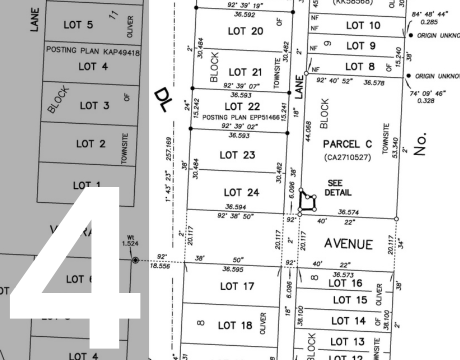
The subdivision process helps ensure roads, services, and lot layouts are well planned and designed to support livable, connected communities.
Subdivision of land in the Town of Oliver is regulated by the Subdivision and Development Servicing Bylaw to ensure new lots are safely and efficiently serviced and integrated into the community.
Before a subdivision can be approved, the developer is required to provide or secure the installation of municipal works and services to Town standards. These may include roads, sidewalks, curbs and gutters, water, sanitary sewer, storm drainage, lighting, landscaping, and underground utilities. Requirements may vary depending on the location of the property and the applicable service level area.
In many cases, developers must enter into a Servicing Agreement with the Town. This agreement outlines required works, construction timelines, inspection and administration fees, and the provision of financial security to guarantee completion and maintenance of the infrastructure.
The Town may also require:
Upgrading of existing services where they do not meet current standards
Excess or extended services to support future development, with costs addressed through latecomer agreements where applicable
Engineering design and inspection by qualified professionals
Relevant information about the Servicing Standards can be found at: Subdivision and development Standards Design Manual
The Subdivision and Development Servicing Bylaw can be found in our Bylaw Library.
To start the application process, connect with us by email at planning@oliver.ca or by phone at 250-485-6250. You may complete the Subdivision Application Form, found at the link below.
The application fees are set through the Fees and Charges Bylaw.
Planning Application Statistics

Find current and past planning applications in this section.
TUP 2026-01
5717 Main StreetApplication Date:
Feb 18, 2026Applicant: Vineet Saluja Status: Active Purpose: Installation of a metal storage
container for temporary storageDocs: 2026-01 OCP/Zoning 2025-11
5753 Main StreetApplication Date:
Sep 24, 2025Applicant: Neoteric Architecture Inc. Status: Active Purpose: Amend OCP and Re-Zone
Property to C2 - Highway CommercialDocs: 2025-11 S 2025-05
210 Co-op AvenueApplication Date:
Apr 23, 2025Applicant: 1309645 BC Ltd. Status: Active Purpose: Create a 3-Lot Subdivision Docs: 2025-05 WDP 2024-17
210 Co-op AvenueApplication Date:
Dec 06, 2024Applicant: 1309645 BC Ltd Status: Active Purpose: Watercourse development
permit for a multi-family developmentDocs: S 2025-13
6450 Eastside Lane/460 Salamander AvenueApplication Date:
Jul 04, 2025Applicant: Harmandeep Gill Status: Complete Purpose: Proposed Lot Line Adjustment Docs: S 2025-09
577 Church AvenueApplication Date:
June 5, 2025Applicant: IPS Professional Builders Status: Complete Purpose: Create a 2-Lot Subdivision Docs: 2025-09 WDP 2025-07
7174 Tucelnuit DriveApplication Date:
May 30, 2025Applicant: Jim Thompson Status: Complete Purpose: Watercourse Development
Permit for proposed SubdivisionDocs: 2025-08 S 2025-08
7174 Tucelnuit DriveApplication Date:
May 30, 2025Applicant: Jim Thompson Status: Complete Purpose: Create a 3-Lot Subdivision Docs: 2025-08 ALR Exclusion 2025-12
336, 370 Zinfandel Ave, 7057 Meadows DriveApplication Date:
Sep 23, 2025Applicant: Town of Oliver Status: Complete Purpose: Amend ALR Exclusion for
Tucelnuit Road RealignmentDocs: 2025-12 TUP 2025-10
5863 Airport StreetApplication Date:
June 25, 2025Applicant: Oliver Aviation Services LTD Status: Complete Purpose: To allow the use of "Outdoor Storage" Docs: Notice TUP 2025-06
5883 Hemlock StreetApplication Date:
Apr 25, 2025Applicant: Cari Wilchynski Status: Complete Purpose: To operate a personal service
establishment (Hair Salon) in the
M1 – General Industrial ZoneDocs: Notice S 2023-20
5843 Okanagan StreetApplication Date:
Oct 23, 2023Applicant: Michael Russo Status: Complete Purpose: Subdivide existing lot into
two parcelsDocs: S 2025-03
5899 Princess PlaceApplication Date:
Mar 12, 2025Applicant: Ecora Engineering and
Environmental Ltd.Status: Complete Purpose: Amend Form P for Phased
Strata DevelopmentDocs: S 2023-13
5791 Sawmill RoadApplication Date:
Apr 03, 2023Applicant: True Consulting Status: Complete Purpose: Create a 7-lot subdivision Docs: DVP 2025-04
6923 Mountainview DriveApplication Date:
Apr 03, 2025Applicant: Maria Nordlund Design Inc. Status: Complete Purpose: Amend interior parcel line setback
from 1.2m to 0.2m to construct a
pergola structure.Docs:
DVP 2025-04DP 2025-01
376/378 Chardonnay AvenueApplication Date:
Feb 14, 2025Applicant: 1079878 BC Ltd Status: Complete Purpose: Construction of Duplex Docs: DP 2025-02
395/397 Chardonnay AvenueApplication Date:
Feb 14, 2025Applicant: 1079878 BC Ltd Status: Complete Purpose: Construction of Duplex Docs: S 2023-07
389 Chardonnay AvenueApplication Date:
Feb 26, 2024Applicant: 1079878 BC Ltd Status: Complete Purpose: Re-approval to subdivide an
existing lot into three parcelsDocs: S 2023-06
380 Chardonnay AvenueApplication Date:
Feb 26, 2024Applicant: 1079878 BC Ltd Status: Complete Purpose: Re-approval to subdivide an
existing lot into three parcelsDocs: S 2024-08
6728 Lakeside DriveApplication Date:
May 22, 2024Applicant: Sunrise Restoration Status: Complete Purpose: Re-approval to subdivide an
existing lot into two parcelsDocs: DP 2024-14
5791 Sawmill RoadApplication Date:
Sep 23, 2024Applicant: 1445189 BC Ltd Status: Complete Purpose: Construction of a 4(four)-plex Docs: SSMUH
Small-Scale Multi-Unit HousingApplication Date:
Applicant: Town of Oliver Status: Complete Purpose: Amend the Official Community
Plan Bylaw 1370.11 and
Zoning Bylaw 1423 to reflect Provincial
Bill 44 (Residential
Development Amendment Act)Docs: DP 2024-05 & DVP 2024-06
207 Maple AvenueApplication Date:
Apr 19, 2024Applicant: 1295474 BC Ltd. Status: Complete Purpose: Construction of industrial warehouse
with a variance to decrease the rear setback
from 7.5m to 1.5mDocs: DP(V) 2023-10/2023-14 & Z 2023-11
591/586 School AvenueApplication Date:
Mar 2023Applicant: Giroux Design Group Inc Status: Complete Purpose: Rezone subject properties from RS1(Residential Low
Density One) to RH1(Residential High Density One) to allow for
the construction of a four-unit townhouse on each lotDocs: DVP 2024-07
6480 Park DriveApplication Date:
Jun 22, 2024Applicant: 1079879 BC Ltd Status: Complete Purpose: Decrease the required off-street vehicle
parking spaces for an apartment building from 1.5
per dwelling unit to 1.2 per dwelling unitDocs: DVP 2024-11
6480 Park DriveApplication Date:
Jul 31, 2024Applicant: Oliver Townhomes Ltd. Status: Complete Purpose: Development Permit amendment
to revise façadeDocs: